How To Use A Korean Sleeping Mask: A Step-by-Step Night Routine

A Korean sleeping mask is a simple way to add an extra layer of hydration to your nighttime skincare routine.
Unlike a traditional face mask that you apply for a short period and then remove, a sleeping mask is designed to remain on your skin while you sleep. Depending on the formula, it may help reduce overnight dryness and leave your skin feeling softer, smoother, and more hydrated by morning.
But where does it actually belong in your routine? Should you use moisturizer underneath it? How much should you apply? And do you need to use one every night? The good news is that using a sleeping mask doesn’t require a complicated 10-step routine.
In this guide, we’ll walk through how to use a Korean sleeping mask step by step, where it fits into your nighttime routine, how often to use one, and the common mistakes worth avoiding.
If you’re still deciding which product to buy, see our guide to Best Korean Sleeping Masks For Deep Overnight Hydration, where we compare sleeping masks based on formula and skin concerns.
What Is A Korean Sleeping Mask?
A Korean sleeping mask, sometimes called a sleeping pack, is a leave-on skincare treatment designed to be applied before bed and left on overnight.
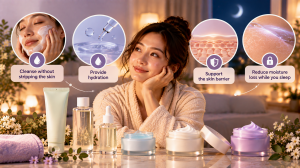
Depending on the formula, a sleeping mask may focus on:
- Hydration
- Moisture retention
- Skin barrier support
- Soothing
- Radiance
- Smoother-looking skin
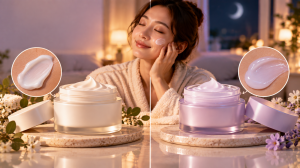
Some sleeping masks have lightweight gel textures, while others are richer and more cream-like. Because formulations vary, always check the instructions for the specific product you’re using.
Sleeping Mask vs. Face Mask: What’s The Difference?
The main difference is how long the product remains on your skin.
Traditional Face Mask
Apply → Wait → Rinse or remove
Sleeping Mask
Apply → Leave overnight → Cleanse or rinse in the morning
A sleeping mask is therefore closer to a nighttime moisturizer or treatment than a conventional wash-off face mask.
Where Does A Sleeping Mask Go In A Korean Skincare Routine?
In most routines, a sleeping mask goes near the end of your nighttime skincare routine.
A simple routine might look like: Cleanser → Toner/Essence → Serum/Ampoule → Moisturizer → Sleeping Mask
However, there is an important exception. Some sleeping masks are designed to function as your final moisturizing step, so you may not need a separate moisturizer underneath. Others are intended to be applied after your normal moisturizer.
Always follow the manufacturer’s instructions for the specific product you’re using.
If you’re looking for a complete Korean-inspired nighttime routine, see our guide to Best Korean Night Skincare Routine For Glowing Skin.
How To Use A Korean Sleeping Mask: Step by Step
Step 1: Remove Your Makeup And Sunscreen
Before applying your nighttime skincare, remove makeup and sunscreen thoroughly. A sleeping mask should not be applied over foundation, cushion makeup, concealer, mascara, or other cosmetics. A cleansing oil or balm can help break down makeup and sunscreen before your regular cleanser.
Step 2: Cleanse Your Skin
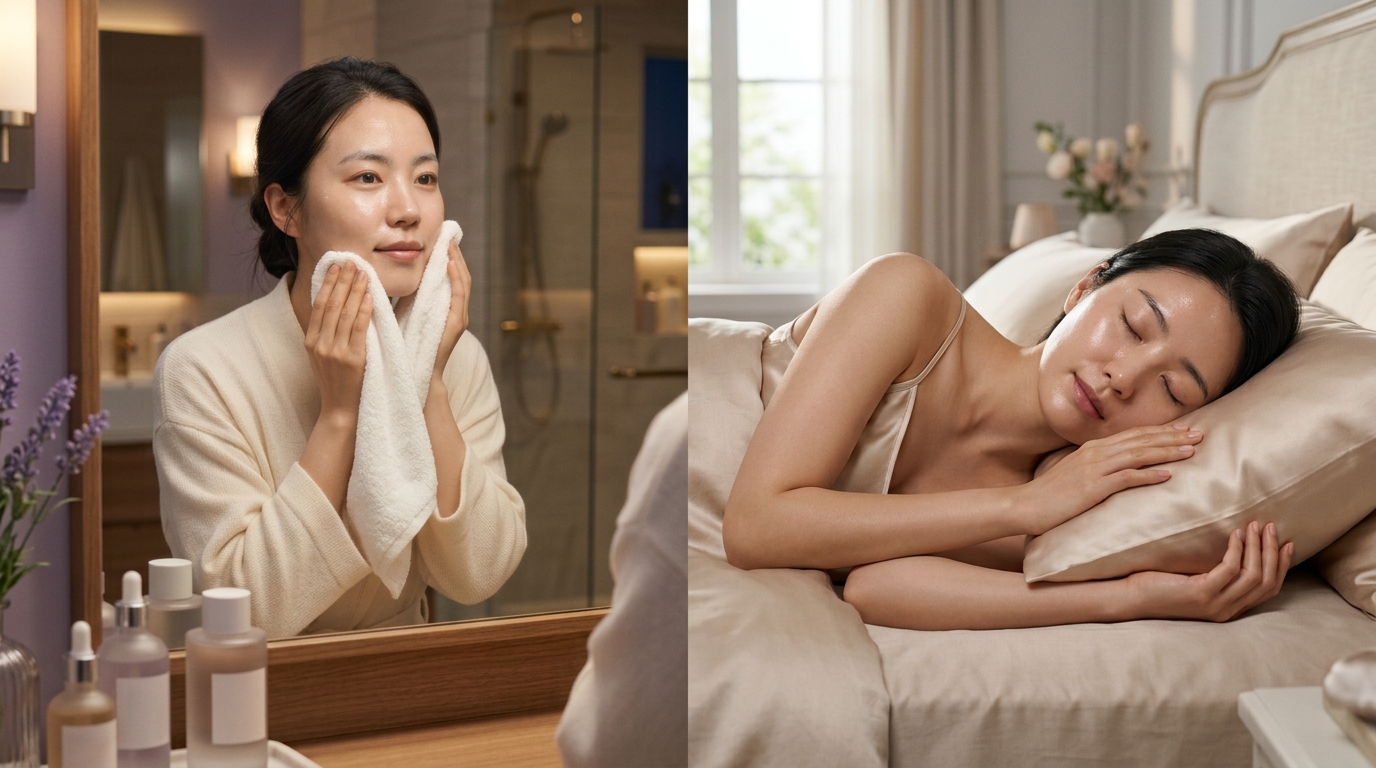
Cleanse your face to remove remaining oil, sweat, sunscreen, dirt, and daily buildup. Use a gentle cleanser and lukewarm water rather than scrubbing aggressively. Your skin should feel clean and comfortable, not tight or stripped.
Step 3: Apply Toner or Essence
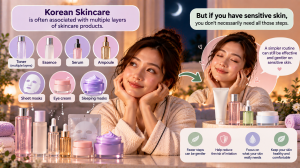
Toner or essence is optional, but it can provide a lightweight layer of hydration before your treatment products. Apply your usual product and allow it to settle before moving to the next step. You don’t need several layers simply because a traditional Korean skincare routine may include them. A simpler routine can work perfectly well.
Step 4: Apply Your Serum or Ampoule
Next, apply your chosen serum or ampoule. This could be a hydrating serum, brightening treatment, or another product selected for your primary skincare concern. You don’t necessarily need several treatment products. If you’re using multiple active ingredients, pay attention to how they work together and avoid unnecessarily complicating your routine.
Step 5: Apply Moisturizer ( If Needed)
Whether you need moisturizer before your sleeping mask depends on the product. If the sleeping mask is designed to be your final moisturizing step, you may apply it after your serum or essence. If it is intended to be used over moisturizer, apply your normal moisturizer first.
Your routine might therefore look like:
Cleanser → Essence → Serum → Moisturizer → Sleeping Mask
or:
Cleanser → Essence → Serum → Sleeping Mask
Both can be correct depending on the formula. When in doubt, follow the product’s instructions.
Step 6: Apply The Sleeping Mask
Apply a thin, even layer across your face. Avoid the immediate eye area unless the product specifically states that it is suitable for use there. You don’t need to apply a thick coating. More product doesn’t automatically mean better results. A heavier layer may simply feel uncomfortable or transfer onto your pillowcase. Start with the amount recommended by the manufacturer.
Step 7: Let It Settle Before Bed
Give the sleeping mask a few minutes to settle before going to bed. You don’t need to wait until your skin feels completely dry. The goal is simply to allow the product to form a comfortable finish and reduce unnecessary transfer onto your pillowcase.
Step 8: Get Some Sleep
Once your nighttime routine is complete, let the sleeping mask do its job while you sleep. A sleeping mask can complement your skincare routine, but it can’t replace adequate sleep or healthy daily habits.
Step 9: Follow Your Morning Routine
In the morning, follow your normal skincare routine. You don’t necessarily need an aggressive cleanser simply because you used a sleeping mask. A gentle cleanse or, depending on your skin and routine, a water rinse may be sufficient. Finish your morning routine with sunscreen. A sleeping mask does not replace daytime UV protection.
How Often Should You Use A Sleeping Mask?
You don’t necessarily need to use a sleeping mask every night. How often you use one depends on the product, your skin, and how your skin responds.
If you’re trying a sleeping mask for the first time, start with the frequency recommended by the manufacturer. If the instructions don’t specify frequency, using it a few nights per week can be a practical way to see how your skin responds before deciding whether you want to use it more often.
A lightweight formula may feel comfortable for more frequent use, while a richer formula may be better suited to occasional use. If you notice irritation, congestion, excessive oiliness, or discomfort, reduce the frequency or stop using the product.
How To Choose A Sleeping Mask For Your Skin Type
The best sleeping mask for you depends more on your skin’s needs than on how popular a product is.
- For Dry Skin
Look for richer moisturizing formulas containing ingredients such as:
- Glycerin
- Hyaluronic acid
- Ceramides
- Squalane
- Panthenol
- For Oily Skin
A lightweight gel or water-based texture may be more comfortable than a rich cream. Remember that oily skin can still experience dehydration, so the goal isn’t to avoid hydration altogether.
- For Combination Skin
A lightweight formula is often a good starting point. You can also adjust the amount applied to different areas of your face if some areas tend to feel drier than others.
- For Sensitive Skin
Keep the formula simple and avoid ingredients you already know your skin doesn’t tolerate. When introducing a new product, consider adding it gradually rather than changing your entire routine at once.
- For Dull-Looking Skin
Look for formulas designed to support a brighter, more radiant-looking complexion. If you’re comparing specific products, our Best Korean Sleeping Masks For Deep Overnight Hydration guide can help you narrow down your options.
Can You Use A Sleeping Mask With Other Skincare Products?
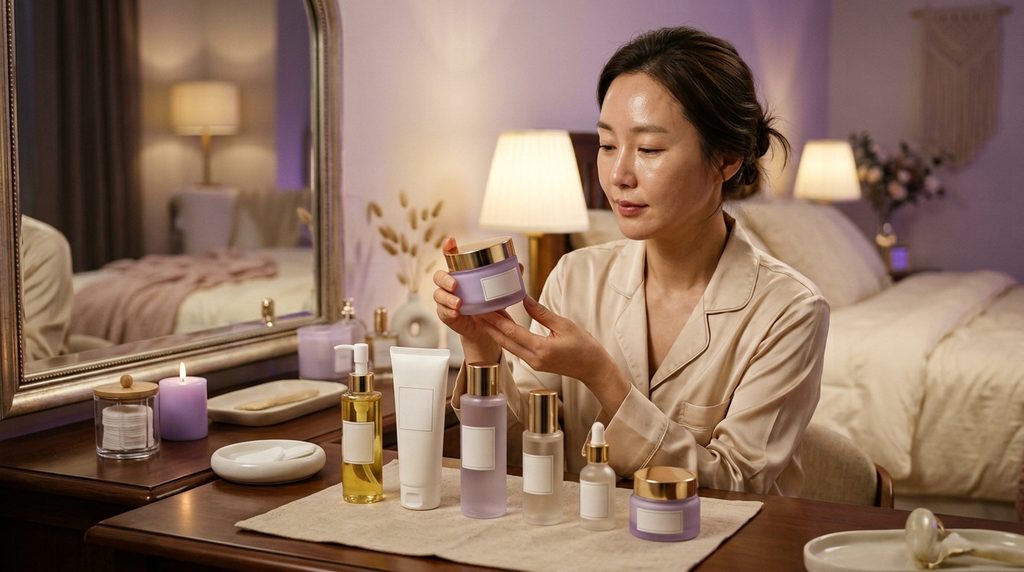
Yes, but you don’t need to use every type of skincare product in the same routine.
A sleeping mask can generally be incorporated alongside:
- Toners
- Essences
- Serums
- Ampoules
- Moisturizers
The main consideration is the rest of your active ingredients. If you’re already using retinoids, exfoliating acids, or other treatment products, avoid automatically adding several new actives at the same time. Introducing products gradually makes it easier to determine what works for your skin and what may be causing irritation.
Common Korean Sleeping Mask Mistakes To Avoid
- Applying It Over Dirty Skin
Always remove makeup, sunscreen, sweat, and daily buildup first. A sleeping mask belongs on clean skin. - Using Too Much
A thicker layer isn’t necessarily more effective. Use the amount recommended by the manufacturer and apply it evenly. - Treating It As A Replacement For Your Entire Routine
A sleeping mask doesn’t replace cleansing, appropriate treatment, or daytime sun protection. Think of it as an optional finishing step. - Combining Too Many Active Ingredients
Adding multiple strong treatments at once can unnecessarily complicate your routine and increase the potential for irritation. - Changing Several Products At Once
If you introduce a new cleanser, serum, moisturizer, and sleeping mask simultaneously, it becomes difficult to identify which product is responsible for a reaction or improvement. When possible, change one thing at a time. - Expecting Overnight Miracles
A sleeping mask may help your skin feel more hydrated and look smoother by morning, but it won’t completely transform your complexion in one night. Consistent skincare and appropriate daily habits matter more than any single product.
A Simple Korean Sleeping Mask Routine For Beginners
If you’re new to Korean skincare, you don’t need to start with a complicated routine.
A simple evening routine might be:
- Cleanser
- Toner or essence: Optional
- Serum: Optional
- Moisturizer: Depending on your sleeping mask
- Sleeping mask: Optional
That’s enough. You don’t need to recreate an elaborate Korean skincare routine to use a sleeping mask effectively. The goal is to create a routine that suits your skin and that you can follow consistently.
Where Does MISSHA Fit Into A Korean Nighttime Routine?
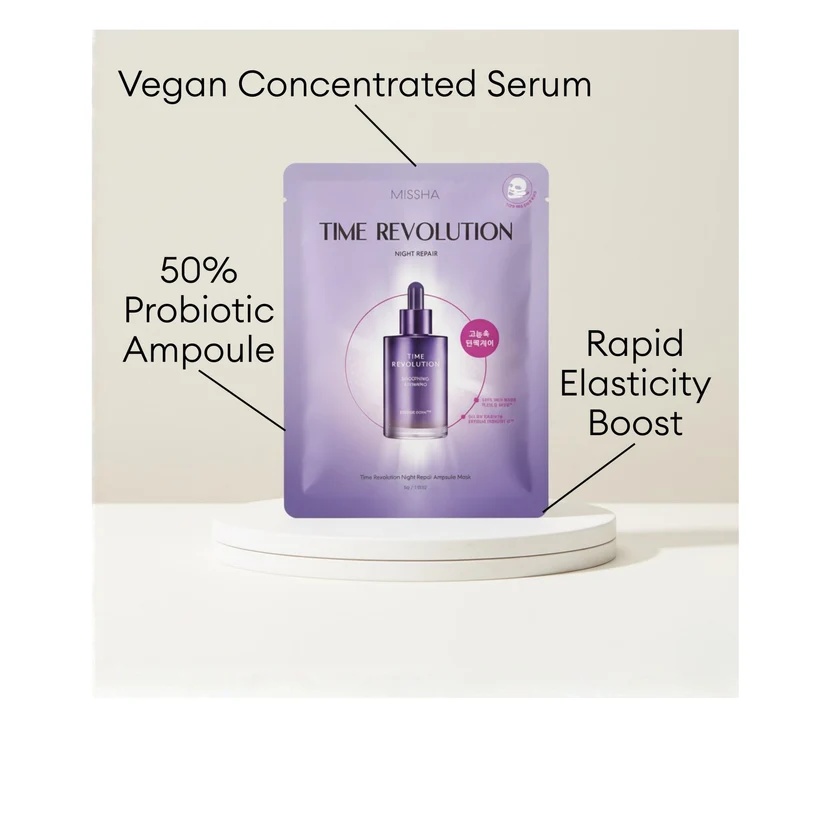
If you’re interested in incorporating MISSHA into a Korean nighttime routine, an ampoule such as the MISSHA Time Revolution Night Repair Ampoule can serve as a treatment step before moisturizer or your sleeping mask, depending on the products you’re using.
We’ve covered that product in more detail in our MISSHA Time Revolution Night Repair Ampoule Review, including its ingredients, texture, potential benefits, and considerations.
It’s also worth remembering that an ampoule and sleeping mask serve different roles. An ampoule is generally a treatment layer, while a sleeping mask is typically used toward the end of the routine to provide additional moisture and conditioning.
You don’t necessarily need both, but they can be combined if the products are compatible with your routine and skin.
Simple Habits That Can Complement Your Night Routine
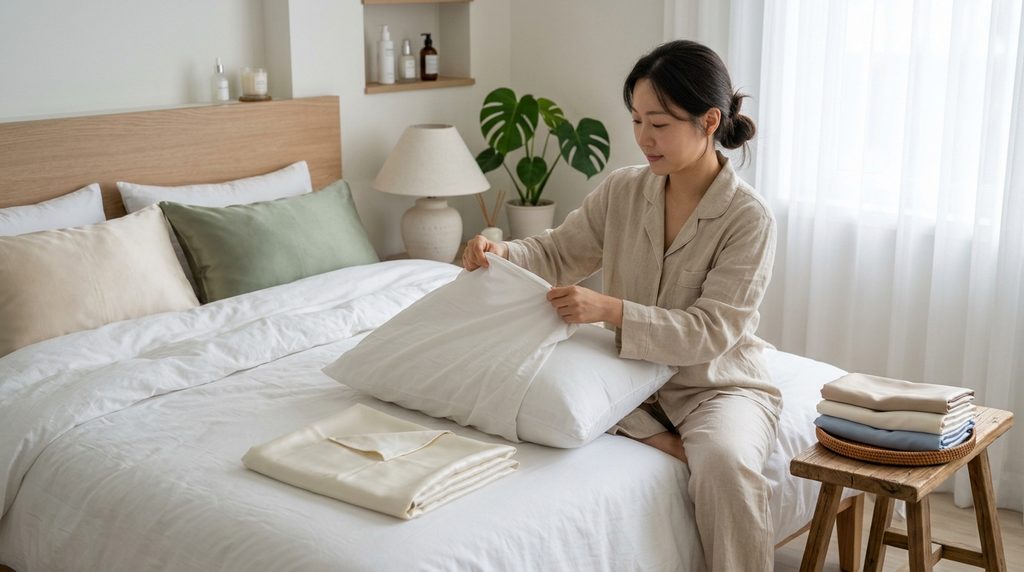
You don’t need complicated tricks to get more from your sleeping mask. Focus on a few fundamentals.
- Keep Your Routine Consistent
A simple routine used consistently is often more practical than constantly changing products.
- Keep Your Pillowcase Clean
Regularly changing your pillowcase is a simple hygiene habit that complements your nighttime routine.
- Don’t Overload Your Skin
Give each product a purpose. If two products perform essentially the same function, you may not need both.
- Prioritize Sleep
A sleeping mask can’t compensate for consistently poor sleep. Your skincare routine and your sleep habits work together.
For more on what happens to your skin overnight, read Why Your Skin Repairs Itself While You Sleep.
What Results Can You Reasonably Expect?
After using a sleeping mask, your skin may feel:
- Softer
- Smoother
- More hydrated
- More comfortable
- Plumper-looking
The result depends on the formula and your individual skin.
These effects don’t necessarily mean the product has produced a dramatic overnight transformation. A sleeping mask is primarily intended to support hydration and the feel and appearance of the skin while you sleep.
If you wake up feeling excessively greasy, irritated, or congested, the product or amount may not be right for you.
Final Thoughts
Learning how to use a Korean sleeping mask is much simpler than the name might suggest.
For most products, the basic process is: Cleanse → Hydrate → Treat → Moisturize if needed → Sleeping Mask → Sleep
The important thing is to treat the sleeping mask as an optional finishing step, not the foundation of your entire skincare routine. Choose a formula that suits your skin, use the recommended amount, follow the manufacturer’s directions, and give your skin time to respond.
And don’t overlook the basics. Removing makeup, cleansing properly, maintaining hydration, getting enough sleep, and protecting your skin from UV exposure during the day all remain important.
If you’re deciding which sleeping mask to try, visit our Best Korean Sleeping Masks For Deep Overnight Hydration guide. If you’re building a complete evening routine, start with our Best Korean Night Skincare Routine For Glowing Skin.
A sleeping mask doesn’t have to make skincare complicated. Used correctly, it’s simply an extra layer of overnight hydration that can make your nighttime routine feel a little more complete.
Frequently Asked Questions
- Do I use a sleeping mask before or after moisturizer?
It depends on the product. Some sleeping masks are formulated to replace the final moisturizer, while others are designed to be applied over it. Follow the manufacturer’s instructions. - Can I use a sleeping mask every night?
Some formulas may be suitable for frequent use, but you don’t necessarily need one every night. Follow the product’s recommended frequency and adjust based on how your skin responds. - Do I wash off a Korean sleeping mask in the morning?
Sleeping masks are designed to remain on overnight. In the morning, cleanse or rinse according to your normal routine and the product’s instructions. - Can oily skin use a sleeping mask?
Yes. Oily skin can still experience dehydration. Lightweight gel-based formulas may feel more comfortable than richer creams. - Can I use a sleeping mask with retinol?
It depends on the products involved. If you’re using retinol or another active treatment, avoid unnecessarily combining multiple potentially irritating products and introduce new products gradually. - Will a sleeping mask give me glass skin overnight?
No product can guarantee that. A sleeping mask may temporarily improve the appearance of hydration and smoothness, but the “glass skin” look is associated with consistent skincare and overall skin health rather than one overnight treatment.