Best Korean Sleeping Masks For Deep Overnight Hydration

There is something particularly satisfying about waking up and feeling like your skin looks better than it did the night before. Your complexion feels softer. Dry patches seem less noticeable. Your skin looks plumper and more refreshed.
While a good night’s sleep is important, your evening skincare routine can also make a noticeable difference in how comfortable and hydrated your skin feels by morning. This is where Korean sleeping masks come in.
Unlike traditional sheet masks that you typically wear for a limited amount of time, sleeping masks are leave-on treatments designed to remain on your skin overnight. They are generally used as the final step of an evening routine, helping provide additional hydration and reduce moisture loss while you sleep.
Current Korean skincare rankings show overnight masks spanning several categories, including hydration, moisturizing, soothing, brightening, and barrier-focused formulas. But do you actually need one?
And how do you know whether a lightweight gel, rich cream, or barrier-supporting sleeping mask is right for your skin? Let’s take a closer look.
What Is A Korean Sleeping Mask?
A Korean sleeping mask, sometimes called a sleeping pack, is a leave-on skincare treatment designed to be applied before going to bed. Think of it as an extra layer of nighttime skincare rather than a replacement for your entire routine.
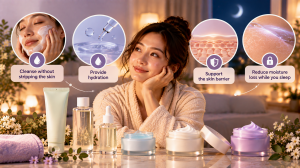
A typical routine might look something like this: Cleanser → Toner/Essence → Serum → Moisturizer → Sleeping Mask
The sleeping mask usually comes at the end because its primary purpose is to provide an additional layer of hydration and help seal in the products applied underneath. The exact formula varies considerably between products.
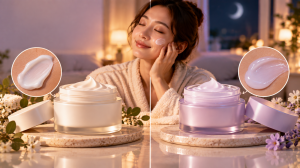
Some are lightweight water-gels designed for hydration. Others are richer cream formulas intended for dry or dehydrated skin. Some focus on soothing ingredients, while others are formulated around brightening or skin-firming concerns.
That means choosing a sleeping mask should be based on your skin’s needs rather than simply buying whichever product is trending.
Why Use A Sleeping Mask At Night?
Your skin loses water throughout the day and night. Factors such as air conditioning, dry indoor environments, hot showers, cleansing, and environmental exposure can all contribute to dryness and dehydration A sleeping mask can provide an additional moisturizing layer that helps reduce this overnight loss of water.
This is particularly useful if your skin tends to feel:
- Tight after cleansing
- Dry when you wake up
- Rough or flaky
- Dull
- Dehydrated
- Uncomfortable after using active skincare
The goal isn’t to completely transform your skin overnight. Instead, think of a sleeping mask as a way to support hydration and comfort while you sleep.
Sleeping Mask vs. Night Cream: What’s The Difference?
This is one of the most common questions people have. If you already use a night cream, do you really need a sleeping mask? Not necessarily. A good moisturizer may already provide everything your skin needs. A sleeping mask is better viewed as an optional extra step for nights when your skin needs additional hydration or nourishment.
Night Cream
A night cream is generally designed to be part of your regular nighttime routine. Its main purpose is to moisturize the skin and support the skin barrier.
Sleeping Mask
A sleeping mask is usually formulated as a more intensive or specialized leave-on treatment. Depending on the product, it may focus on hydration, soothing, brightening, nourishment, or barrier support.
Many Korean sleeping masks are designed to be used only a few nights per week rather than necessarily every night. Current Korean product rankings include lightweight gels, rich moisturizing masks, and soothing formulas for different skin needs. So if your skin already feels comfortable and hydrated, you may not need one every night.
Who Should Consider A Korean Sleeping Mask?
Sleeping masks can be particularly useful for people whose skin regularly feels dehydrated or dry.
- Dry Skin
If your skin frequently feels tight, rough, or flaky, a richer overnight mask can provide additional moisture and comfort. - Dehydrated Skin
Even oily skin can become dehydrated. If your complexion feels tight but becomes shiny during the day, you may benefit from a lightweight hydrating sleeping mask rather than a heavy cream. - Dull Skin
Some sleeping masks contain ingredients designed to support a brighter, more radiant-looking complexion. However, results depend on the individual formula and should not be confused with instant skin transformation. - Skin That Feels Stressed
If your skin feels uncomfortable after environmental exposure or a demanding skincare routine, a simple soothing formula may be preferable to adding more strong active ingredients.
How To Choose The Best Korean Sleeping Mask For Your Skin
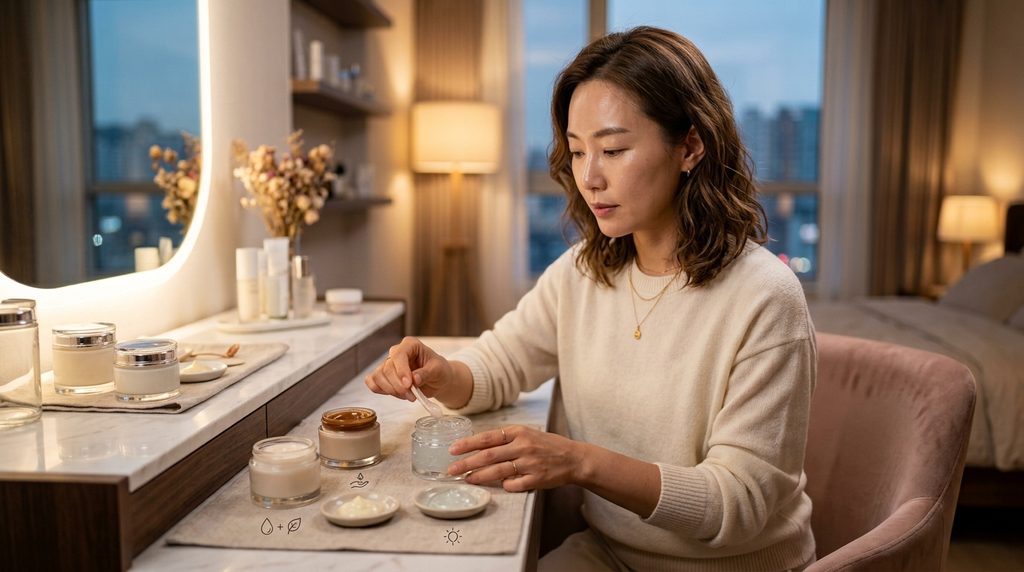
- For Dry Skin
Look for:
- Rich moisturizing ingredients
- Humectants
- Emollients
- Barrier-supporting ingredients
- Hyaluronic acid
- Ceramides
A richer cream or balm texture may feel more comfortable than a lightweight gel.
- For Oily Skin
Avoid assuming that oily skin doesn’t need hydration. Instead, look for lightweight formulas with a gel or water-based texture. The goal is to provide hydration without leaving a thick, greasy layer on the skin.
- For Combination Skin
A lightweight sleeping mask is often the easiest option. You can also adjust how much product you apply to different areas. For example, apply a slightly thicker layer to dry areas while keeping the T-zone lighter.
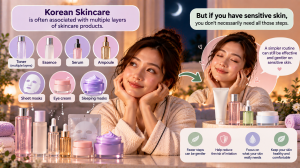
- For Sensitive Skin
Keep the routine simple. Look for gentle formulas and avoid introducing multiple new active ingredients at once. If your skin is particularly reactive, fragrance-free or minimal formulas may be easier to tolerate. Always patch test a new skincare product if you’re concerned about irritation.
Ingredients To Look For In A Korean Sleeping Mask
The ingredient list can tell you much more than the packaging. Here are several ingredients worth understanding.
Hyaluronic Acid
Hyaluronic acid is a humectant that helps attract and hold water in the skin. It’s particularly useful when your primary concern is dehydration.
Ceramides
Ceramides are naturally occurring lipids that play an important role in the skin barrier. A sleeping mask containing barrier-supporting ingredients can be particularly appealing if your skin frequently feels dry or compromised.
Glycerin
Glycerin is another well-established humectant used in many moisturizing formulas. It helps attract water and is commonly found in hydrating skincare.
Peptides
Peptides are short chains of amino acids used in skincare formulations for various purposes, including supporting the appearance of firmer, healthier-looking skin. If you’re interested in overnight skincare with an anti-aging focus, peptides may be an ingredient worth considering.
Centella Asiatica
Centella asiatica is widely used in Korean skincare for its soothing properties. It can be a useful ingredient to look for when your priority is calming and maintaining comfortable-looking skin.
Fermented Ingredients
Fermented ingredients are particularly associated with Korean skincare. They are used in a variety of formulations designed to support hydration, radiance, and overall skin appearance. If you’re already interested in fermented skincare, this is one area where Korean sleeping masks can fit naturally into your routine.
**Find Out On : Time Revolution Night Repair Ampoule Sheet Mask 6PK
How To Use A Korean Sleeping Mask
Using a sleeping mask doesn’t need to make your nighttime routine complicated.
Step 1: Cleanse Your Skin
Start by removing makeup, sunscreen, oil and daily environmental buildup. Never use a sleeping mask as a substitute for cleansing.
Step 2: Apply Your Lightweight Products
Apply your toner, essence, or serum according to your normal routine. Give each layer a moment to settle.
Step 3: Apply Moisturizer
If your sleeping mask is designed to be the final occlusive or moisturizing layer, you may not always need a separate heavy moisturizer. Follow the instructions for your specific product.
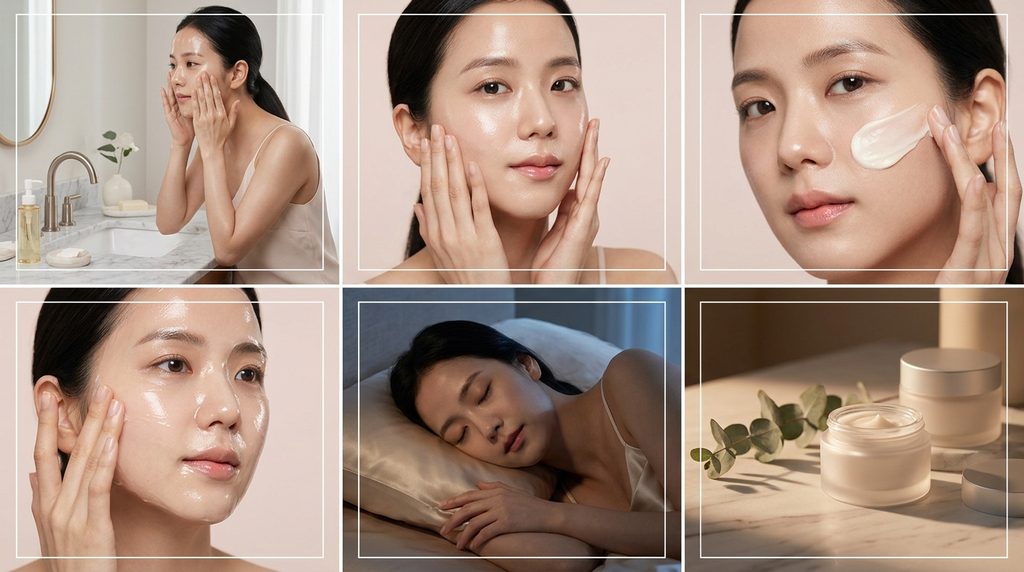
Step 4: Apply The Sleeping Mask
Use a thin, even layer over the face. More product isn’t necessarily better. A thick layer may feel uncomfortable, transfer onto your pillow, or simply be unnecessary.
Step 5: Go To Sleep
Allow the product to remain on your skin overnight. In the morning, cleanse your face according to your normal routine.
How Often Should You Use A Sleeping Mask?
This depends on the formula and your skin. For many people, two or three nights per week is a sensible starting point.
Current Korean skincare guidance and product rankings commonly position overnight masks as an occasional intensive hydration step rather than something everyone needs to use every night.
If your skin responds well, you can adjust the frequency according to the product’s instructions and your individual needs.
If your skin becomes irritated, congested, or uncomfortable, reduce the frequency or stop using the product.
Remember: More skincare isn’t automatically better skincare.
Best Korean Sleeping Masks By Skin Concern
Instead of looking for one universal winner, consider matching the product to your skin concern.
Best For Deep Hydration
Look for a rich or water-gel formula containing humectants and moisturizing ingredients. Current Korean overnight-mask rankings feature products ranging from lightweight hydration gels to richer moisturizing formulas, showing just how different the category can be.
Best For Dry Skin
Choose a richer formula with barrier-supporting and moisturizing ingredients.
Best For Oily Skin
Look for a lightweight gel texture that provides hydration without a heavy finish.
Best For Sensitive Skin
Prioritize simple, soothing formulas and introduce them gradually.
Best For Dull Skin
Look for formulas containing ingredients aimed at improving the appearance of radiance and uneven tone.
Korean Sleeping Masks And The “Glass Skin” Look
If you’ve ever wondered how Korean skincare routines create that famous glass skin appearance, hydration plays an important role. Glass skin isn’t literally glass-like skin.
It’s a beauty term used to describe a complexion that looks:
- Smooth
- Hydrated
- Plump
- Clear
- Radiant
- Healthy
A sleeping mask can contribute to the hydrated appearance, but it isn’t a magic shortcut. The foundation is still a consistent routine.
That means cleansing properly, moisturizing regularly, protecting your skin from UV exposure, getting enough sleep, and choosing products that your skin actually tolerates. A sleeping mask simply adds another tool to the routine.
Where A Sleeping Mask Fits Into A Korean Night Routine
If you’re new to Korean skincare, you don’t need ten different products.
A simple routine can be enough:
- Cleanser
Remove makeup, sunscreen, oil, and environmental buildup. - Essence or Toner
Add lightweight hydration. - Serum
Target your primary skincare concern. - Moisturizer
Support hydration and the skin barrier. - Sleeping Mask
Add an optional final layer when your skin needs extra overnight hydration.
If you’d like a complete step-by-step guide, read our Best Korean Night Skincare Routine For Glowing Skin. And if you’re interested in understanding why nighttime matters in the first place, see our guide on Why Your Skin Repairs Itself While You Sleep.
Should You Use A Sleeping Mask Every Night?
Not necessarily. This is an important point because skincare marketing can sometimes make complicated routines seem essential. If your skin is already hydrated and comfortable, there may be no reason to add another product every night.
Instead, consider using a sleeping mask when your skin needs additional support.
For example:
- After a long flight
- During dry weather
- When indoor air conditioning is strong
- When your skin feels unusually tight
- When your complexion looks dull and dehydrated
Think of it as an extra hydration step, not a mandatory part of everyone’s routine.
Common Sleeping Mask Mistakes
- Applying Too Much
A sleeping mask doesn’t need to be applied like a thick facial cream. A thin, even layer is usually enough unless the product specifically recommends otherwise. - Using Too Many Active Ingredients
If your serum already contains strong exfoliating acids or retinoids, adding another active-heavy treatment may increase the risk of irritation. Keep your routine balanced. - Skipping Cleansing
A sleeping mask should never be applied over makeup, sunscreen or accumulated dirt. Clean skin comes first. - Ignoring Your Skin Type
The richest sleeping mask isn’t automatically the best. Someone with oily skin may prefer a lightweight gel, while someone with very dry skin may appreciate a richer formula. - Expecting Overnight Miracles
A sleeping mask can improve the appearance of hydration and smoothness, but healthy-looking skin comes from consistent care over time.
What About MISSHA?
If you’re building a Korean nighttime routine around MISSHA, the brand is particularly relevant to this article because several of its skincare products can be incorporated into an overnight-focused routine.
Rather than buying a product simply because it is labeled as a “sleeping” treatment, consider what your skin actually needs. For example, if your primary concern is overnight hydration, look for a moisturizing product that complements the rest of your routine.
If you’re more interested in skin texture and radiance, you may prefer an essence or serum as the treatment step and use a moisturizer as the final layer.
You can explore MISSHA’s current best-selling skincare products here:
**PDRN NAD Renew Peel Shot 25
If your focus is dullness and uneven-looking texture, this treatment can be considered as part of a broader skincare routine rather than simply adding more hydration.
**MISSHA Artemisia Treatment Essence
If your skin feels stressed or easily irritated, this soothing essence can fit into the earlier hydration and treatment stages of a nighttime routine.
**MISSHA Time Revolution Night Repair Ampoule
For readers interested in a fermented-ingredient-focused nighttime serum, this is a natural product to explore alongside an overnight hydration routine.
The important point is to build the routine around your skin rather than trying to use every product at once.
A Simple Overnight Hydration Routine
If you’re overwhelmed by all the Korean skincare options available, start here:
For Normal To Dry Skin
Cleanser → Essence → Hydrating Serum → Moisturizer → Sleeping Mask
For Oily Skin
Cleanser → Lightweight Essence → Serum → Lightweight Moisturizer → Gel Sleeping Mask
For Sensitive Skin
Gentle Cleanser → Simple Hydrating Essence → Barrier Serum → Gentle Moisturizer
You may not need a sleeping mask every night. Start with a simple routine and add one only if your skin benefits from it.
Final Thoughts
The best Korean sleeping mask isn’t necessarily the one with the longest ingredient list or the most impressive marketing claims. It’s the one that fits your skin.
For dry or dehydrated skin, an overnight mask can be a useful way to add another layer of hydration before bed. For oily skin, a lightweight gel may provide the moisture you need without feeling heavy. And for sensitive skin, a simple soothing formula may be more valuable than a product packed with multiple active ingredients.
Most importantly, don’t forget the foundation of good nighttime skincare: Cleanse. Hydrate. Moisturize. Sleep. Repeat.
A sleeping mask is an optional finishing touch, not a replacement for the basics. And if you’re building a Korean-inspired evening routine from scratch, start with our Best Korean Night Skincare Routine For Glowing Skin to see how all the steps fit together.
Frequently Asked Questions
- What is a Korean sleeping mask?
A Korean sleeping mask is a leave-on nighttime treatment designed to provide additional hydration and nourishment while you sleep. It is usually applied as one of the final steps of an evening skincare routine. - Is a sleeping mask better than a night cream?
Not necessarily. They serve overlapping purposes. A night cream may be enough for everyday moisturizing, while a sleeping mask can provide an additional treatment step when your skin needs extra hydration. - How often should I use a Korean sleeping mask?
Many people can start with two or three times per week and adjust based on their skin and the product’s instructions. - Can oily skin use a sleeping mask?
Yes. Oily skin can still be dehydrated. Look for lightweight gel or water-based formulas rather than heavy creams. - Can I use a sleeping mask every night?
Some products may be suitable for frequent use, while others are intended for occasional use. Follow the specific product instructions and pay attention to how your skin responds. - Should I use moisturizer before a sleeping mask?
It depends on the product. Some sleeping masks are designed to be the final moisturizing layer, while others work best over moisturizer. Always follow the manufacturer’s directions. - Do sleeping masks really give you glass skin?
A sleeping mask can temporarily improve the appearance of hydration, smoothness, and radiance, but it cannot create permanent “glass skin” overnight. Consistent skincare, sun protection, sleep, and healthy habits matter much more over time.