Why Your Pillowcase May Be Causing Morning Frizz (And How to Fix It)

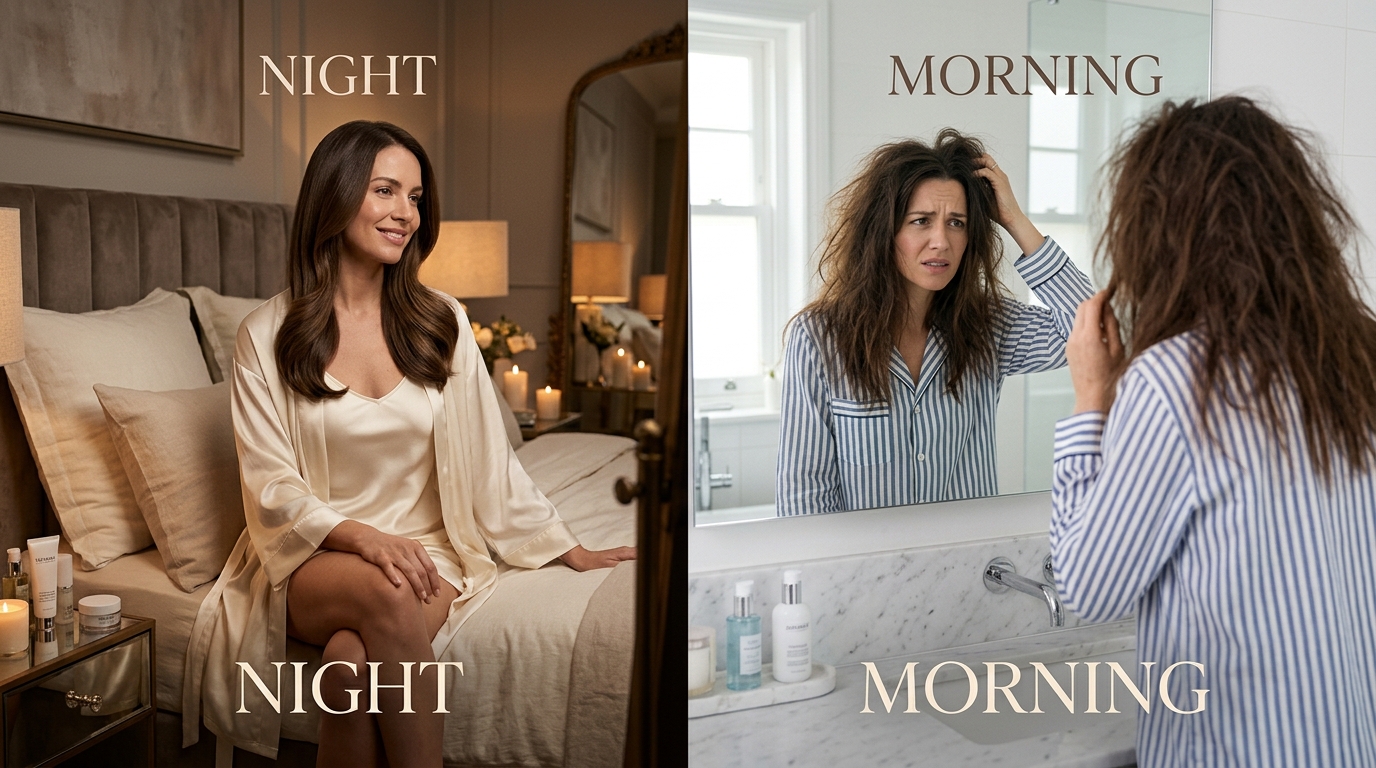
Have you ever gone to bed with your hair looking perfectly fine, only to wake up the next morning wondering what happened? One moment your hair feels smooth, manageable, and under control. Then after a night’s sleep, you’re staring into the mirror trying to tame a halo of flyaways, flattened sections, and stubborn frizz that seems to have appeared out of nowhere.
Sound familiar? If it does, you’re certainly not alone. Many people immediately blame humidity, their shampoo, or the weather. Others assume they simply need more hair products. While those factors can certainly play a role, there’s one surprisingly common culprit that often goes unnoticed.
Your pillowcase! At first, it may sound a little strange. After all, how much difference can a pillowcase really make? Quite a bit, actually. Think about it for a moment. Most of us spend between seven and eight hours sleeping every night. That’s roughly one-third of our lives with our hair resting against the same surface.
During that time, we naturally change sleeping positions without even realizing it. We turn from one side to the other, adjust our pillows, and move our heads countless times throughout the night. Every movement creates friction. Now imagine rubbing a delicate piece of fabric against the same surface for thousands of hours every year. Over time, you’ll start to notice signs of wear.
Your hair isn’t much different. While your pillowcase isn’t solely responsible for frizz, it can become one of those small, everyday factors that gradually affects how your hair looks and feels each morning. The good news?
Unlike the weather, your genetics, or humidity levels, your pillowcase is one thing you can actually change. Before rushing out to buy a new one, though, let’s first understand what’s really happening while you’re asleep.
What Really Happens To Your Hair While You Sleep?
Most of us think of sleep as a time when our bodies are resting. Ironically, our hair doesn’t get quite the same peaceful experience. Even people who consider themselves quiet sleepers can move dozens of times throughout the night. Every shift of your head creates contact between your hair and your pillowcase.
Sometimes that movement is barely noticeable. Other times, especially if you’re a side sleeper or tend to toss and turn, your hair is constantly rubbing against the fabric beneath you. As a matter of fact, this repeated movement is known as mechanical friction. While the term sounds technical, the idea is actually very simple.
Every time two surfaces rub together, friction occurs. Hair rubbing against a pillowcase is no exception. The rougher the fabric, the greater the resistance. The smoother the fabric, the easier your hair can glide across it. Over hundreds of nights, that difference begins to add up.
Why Friction Matters More Than Most People Realize
Let’s be honest. Most of us spend far more time choosing the right shampoo than thinking about what our hair touches for eight hours every night. Yet friction is something your hair experiences consistently.
When strands repeatedly catch against rougher fabrics, they may become more prone to:
- Morning frizz
- Tangles
- Flyaways
- Rough-feeling ends
- Hair that’s harder to style
This doesn’t mean your pillowcase is “damaging” your hair every night. That’s an exaggeration. However, if your hair is already dry, color-treated, curly, fine, or naturally prone to frizz, reducing unnecessary friction can be one small step toward making your morning routine a little easier.
Think of it this way. Hair care isn’t usually about finding one miracle solution. It’s often about making several small improvements that work together over time. Choosing a gentler pillowcase is simply one of those improvements.
Is Cotton Really The Problem?
Not exactly. Cotton has been the standard choice for bedding for generations, and for good reason. It’s comfortable, breathable, affordable, and easy to wash. There’s nothing inherently wrong with sleeping on cotton.
The issue is simply that cotton isn’t the smoothest surface available. Compared with materials like silk, cotton has a more textured feel. As your hair moves across that texture throughout the night, it naturally experiences more resistance.
For some people, the difference may be minimal. For others, especially those with curly, long, bleached, or fine hair, that extra friction may contribute to waking up with hair that’s more tangled and difficult to manage.
That’s one reason silk and satin pillowcases have become increasingly popular in recent years. But before you assume silk is automatically the answer, it’s worth understanding exactly what it can and can’t—do for your hair.
Could Switching Your Pillowcase Really Make A Difference?
This is probably the question you’ve been waiting for. Can something as simple as changing your pillowcase actually help reduce morning frizz? The honest answer is… It can but it is important to keep your expectations realistic.
A pillowcase isn’t a miracle product:
- It won’t repair years of heat damage.
- It won’t reverse split ends overnight
- It certainly won’t replace a healthy hair care routine.
However, it may help reduce one of the everyday factors that contributes to frizz or overnight friction.
Think about it this way. If your hair is rubbing against the same fabric for seven or eight hours every night, choosing a smoother surface simply makes sense. It is similar to wearing comfortable shoes instead of shoes that constantly rub against your feet. Neither choice changes how you walk, but one creates far less unnecessary friction. Hair works in much the same way.
Why Silk Pillowcases Have Become So Popular
Over the past few years, silk pillowcases have become one of the most talked-about beauty sleep products. At first, some people assumed it was simply another social media trend. But the popularity isn’t just about luxury. Many people choose silk because of its naturally smooth surface. Instead of creating as much resistance as rougher fabrics, silk allows hair to glide more easily while you sleep.

As a result, many users report waking up with:
- Less noticeable frizz
- Fewer tangles
- Smoother-looking hair
- Hair that’s easier to brush and style
- Fewer “bad hair mornings”
Of course, everyone’s experience is different. If your frizz is mainly caused by humidity or chemical damage, changing your pillowcase alone won’t solve everything. But if overnight friction is part of the problem, a smoother sleep surface may become another helpful piece of your overall hair care routine.
What About Satin Pillowcases?
This is another question we hear quite often. Many people wonder whether satin offers similar benefits to silk. The short answer is yes, at least to a certain extent. Both silk and satin are generally smoother than cotton, which means both may help reduce friction while you sleep. The biggest difference is that silk is a natural fiber, while satin refers to the way a fabric is woven and is often made from synthetic materials like polyester.
For many people, satin provides an excellent balance between performance and affordability. If you are still deciding which option suits your needs best, we have put together a detailed comparison in our guide to Silk vs Satin Pillowcases For Hair, where we explain the advantages and trade-offs of each.
Other Simple Ways To Wake Up With Less Frizz
Changing your pillowcase is only one piece of the puzzle. As a matter of fact, combining several small habits often produces better results than relying on one solution alone. Below are the best 4 bedtime habits which worth your consideration.
Changing your pillowcase is only one piece of the puzzle. As a matter of fact, combining several small habits often produces better results than relying on one solution alone. Below are the best 4 bedtime habits which worth your consideration.
1) Don’t Go to Bed With Soaking Wet Hair
Wet hair is generally more vulnerable than dry hair. When you sleep with dripping wet hair, it can tangle more easily as you move throughout the night. Whenever possible, allow your hair to dry naturally or use a hair dryer on a gentle setting before heading to bed.
2) Apply a Lightweight Leave-In Conditioner
If your hair tends to feel dry, a leave-in conditioner can help add moisture before you sleep. Just remember that more product isn’t always better. A small amount is often enough to improve manageability without leaving your hair feeling heavy.
3) Loosely Tie Long Hair Before Sleeping
If you have long hair, consider loosely braiding it or tying it into a low ponytail using a soft scrunchie. This simple habit may help reduce tangles while you’re sleeping. Avoid tying your hair too tightly, as excessive tension can contribute to breakage over time.
4) Brush Gently Before Bed
Removing tangles before you sleep can make a noticeable difference the following morning. Instead of pulling aggressively through knots, use a wide-tooth comb or a detangling brush and work from the ends upward. Your hair will thank you.
Is It Time To Replace Your Pillowcase?
Let’s be honest. If you’ve never thought about your pillowcase before today, you are probably not alone. Most people replace shampoos long before they ever consider changing the fabric they sleep on every night. But if you constantly wake up with frizz, tangles, or hair that’s difficult to manage despite using quality hair products, your pillowcase may be worth a closer look.
It is not about chasing beauty trends. It is about removing one potential source of unnecessary friction. Sometimes the smallest changes are the ones that quietly improve your daily routine.
Final Thoughts
Morning frizz can be frustrating. You spend time caring for your hair, only to feel like you’ve gone backwards after a single night’s sleep. The good news is that while no pillowcase can completely eliminate frizz, choosing a smoother sleep surface may help reduce one of the everyday factors that contributes to it. If you’re curious about making the switch, your next step depends on where you are in your buying journey. If you’re still deciding between materials, our guide to Silk vs Satin Pillowcases For Hair explains the key differences.
And if you’ve already decided that genuine silk is the direction you want to go, do not miss our comprehensive guide to the Best Silk Pillowcases For Hair Breakage, where we compare several popular options and explain what to look for before you buy. After all, healthier-looking hair isn’t usually the result of one dramatic change. More often than not, it is the result of making smarter choices, one small habit at a time.
Frequently Asked Questions
Can a cotton pillowcase really cause frizz?
Cotton doesn’t directly cause frizz, but its rougher surface may create more friction than smoother fabrics like silk or satin. For some hair types, that extra friction can contribute to tangles and flyaways.
Will changing my pillowcase stop morning frizz?
Not completely. Frizz is influenced by many factors, including humidity, hair type, and styling habits. However, a smoother pillowcase may help reduce friction while you sleep.
Is silk better than satin for frizzy hair?
Both can be gentler on hair than cotton. Silk is a natural fiber that many people prefer for its premium feel, while satin is often a more affordable alternative.
Which hair types benefit most from a smoother pillowcase?
People with curly, fine, long, dry, bleached, or color-treated hair are often more likely to notice the benefits of reducing overnight friction.
Recommended Silk Pillowcases:
23mm 6A+ 100% Mulberry Silk Pillowcase With Zipper With Laundry Bag
Key features: 23mm thickness for durability and luxury feel, 6A+ grade 100% mulberry silk, Hidden zipper closure for secure fit, Includes matching silk laundry bag, Available in 10+ colors and 5 sizes, Hypoallergen.
23mm 6A+ Zipper Mulberry Silk Pillowcases 2 Pack Mixed Colors
Key features: 23mm thickness, 6A+ grade mulberry silk, Zipper closure for secure fit, Naturally hypoallergenic and anti-bacterial, Reduces sleep creases and wrinkles, Minimizes hair frizz and breakage, Thermoregula.
23mm 6A+ 100% Mulberry Silk Fitted Sheet Set 2pcs Crib | Toddler With Laundry Bag
Key features: 23mm momme weight – premium thickness for durability, 100% Mulberry silk – Grade 6A highest quality, Fitted sheet set – 2 pieces: 1 fitted sheet + 1 flat sheet, Includes matching silk laundry bag for baby’s sensitive skin.